Recommended Blog Posts
- Study Permit Proof of Funds: GIC vs. 6-Month Bank Statements—Which Is Safer In 2026?
- Top Designated Learning Institutions (DLIs) in 2026: Province-Wise Guide for International Students
- Australia Border Opening for International Students: Latest Updates 2026
- How to Convert a Visitor Visa to a Study Permit Without Leaving Canada (2026 Guide)
- How to Write a Perfect SOP for Canada Study Visa Approval in 2026
Study Agriculture and Crop Research in Canada: Admission Process, Eligibility, and Scholarships for International Students
Publish On: November 19, 2025
Why Choose Canada for Agricultural and Crop Research Studies
When I talk to students who choose Canada to study agriculture in 2026, most say the same thing: “It feels like the perfect balance of modern science and real-world farming.” And it’s true. The country is home to some of the world’s leading researchers in soil health, agri-tech, and crop improvement.
Plus, agriculture isn’t just an academic field in Canada — it’s a priority industry. The government invests heavily in food security, climate-smart farming, and rural innovation. That means better labs, more scholarships, and higher chances of employment after graduation.
And here’s the part that gets every Indian student’s attention — the Agriculture immigration pathways.
Agriculture graduates are highly valued in provinces like Saskatchewan and Manitoba, which can make your journey to Canadian permanent residency a lot smoother.
Top Universities and Colleges Offering Agriculture & Crop Research Programs
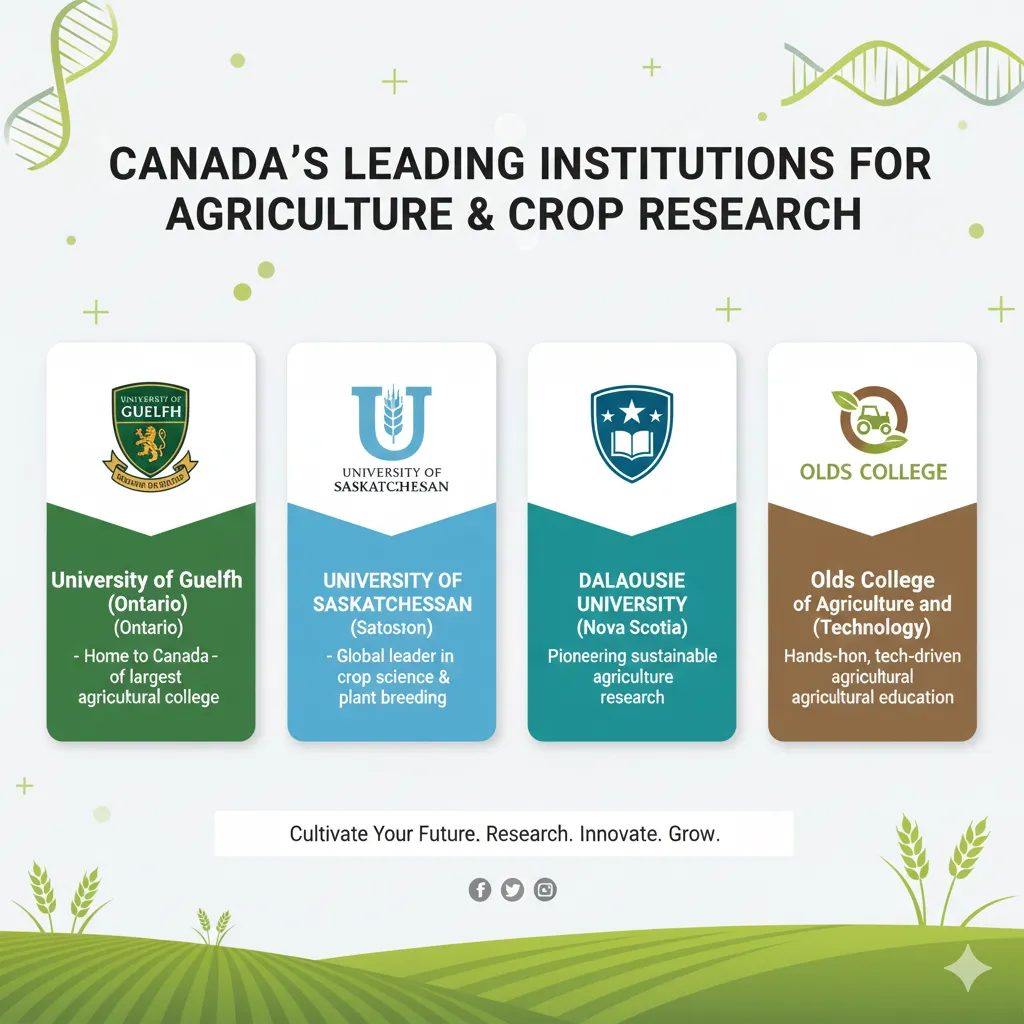
Canada has a long list of excellent universities for agricultural studies, but a few really stand out for their research, technology, and hands-on approach.
University of Guelph (Ontario)
If you’ve ever searched for the best agriculture university in Canada, Guelph will always appear at the top. People literally call it Canada’s Food University. The programs here — from Crop Science and Agri-Food Systems to Sustainable Agriculture — are globally recognized. What’s special is how the university collaborates with Agriculture and Agri-Food Canada (AAFC). Students don’t just study from textbooks; they get involved in real agricultural research that impacts national policy.
University of Saskatchewan (Saskatoon)
Located in the heart of Canada’s prairies, Saskatchewan offers the perfect environment for agriculture students. The College of Agriculture and Bioresources is known for breakthroughs in crop biotechnology and soil science. Its Global Institute for Food Security (GIFS) is doing incredible work on improving crop yields and climate resilience — topics that matter globally right now.
Dalhousie University (Nova Scotia)
Dalhousie’s Faculty of Agriculture in Truro is smaller and more intimate, perfect for students who like hands-on learning. Here, you’ll find programs in aquaculture, environmental agriculture, and crop systems. It’s great for those who want a community-based campus with lots of field exposure.
Olds College of Agriculture and Technology (Alberta)
If the idea of using drones to monitor crops excites you, you’ll love Olds College. It’s famous for its Smart Farm, where students test real-world agri-tech solutions — from precision irrigation to sensor-based farming. You’ll basically be learning in Canada’s version of a live agricultural lab.
Other Universities Worth Exploring
- University of Manitoba – strong in agri-business and crop management.
- McGill University – excellent for plant and environmental sciences.
- University of Alberta – focuses on agri-tech and sustainability.
- University of British Columbia (UBC) – great for land and food systems.
Steps to Apply for Agriculture Courses in Canada
Step 1: Choose Your Program
Pick a specialization (crop science, soil management, sustainable agriculture, agri-business) and shortlist suitable universities.
Step 2: Check Intakes & Deadlines
-
Fall (September): Main intake
-
Winter (January): Limited seats
-
Spring/Summer (May): Very few options
Apply 6–8 months in advance.
Step 3: Apply Online
Submit applications through university portals (e.g., OUAC in Ontario) with required documents and SOP.
Step 4: Get Your LOA
Receive a Letter of Acceptance (LOA) from a DLI — essential for your study permit.
Step 5: Apply for Study Permit
Apply via IRCC with LOA, proof of funds, medical exam, and biometrics.
Step 6: Prepare to Travel
Arrange accommodation, keep documents ready, and attend university orientation.
Documents and Certifications Required
You’ll need these documents for almost every university and visa application to graduate from the agriculture and food stream:
- Academic transcripts & certificates
- Proof of English test results (IELTS/TOEFL)
- Valid passport
- Statement of Purpose (SOP)
- Letters of Recommendation (LORs)
- Proof of funds
- Letter of Acceptance (LOA)
- Medical exam results
- Police clearance certificate
Tip: Scan everything neatly and label your files. The admission team appreciates organized submissions.
Scholarships, Career Scope & PR Pathways For Agriculture Scholars
Scholarships for International Agriculture Students
Now, let’s be real — tuition and living in Canada can feel heavy on the pocket. But the good news is, there are many scholarships out there if you know where to look.
Here are the ones I always tell students to apply for first:
1. Canadian Commonwealth Scholarship Program
This is a government-funded scholarship for students from Commonwealth countries — which means Indian students are eligible. It covers tuition, airfare, and living allowance, sometimes even research costs.
Tip: Strong research proposals and good grades make a huge difference here.
2. Vanier Canada Graduate Scholarships
If you’re planning a Master’s or PhD, this one’s a dream. It’s highly competitive but pays well — around CAD 50,000 per year for three years. Your profile must show leadership, research potential, and academic excellence.
3. Ontario Graduate Scholarship (OGS)
If you’re applying to a university in Ontario (like Guelph or Toronto), check this one. It gives CAD 10,000–15,000 per year, and your university usually nominates you automatically based on academic results.
4. University-Specific Scholarships
- University of Guelph International Scholarship: CAD 5,000–8,500 based on grades.
- Dalhousie Faculty of Agriculture Scholarship: CAD 1,000–4,000.
- University of Saskatchewan Graduate Scholarships: CAD 16,000+ per year for thesis-based programs.
5. Private & Industry Grants
Don’t ignore small organizations or Indian foundations.
Groups like Shastri Indo-Canadian Institute, Tata Trusts, and even Canada India Education Council offer partial funding for students in science or research programs.
Pro tip: Start looking for scholarships as soon as you start applying. Many close 3–4 months before the admission deadline.
Internship and Work Opportunities
Agriculture in Canada is not just about theory — you’ll get your hands dirty (in a good way!).
Almost every college includes co-op terms or paid internships where you work with local farms, agri-tech companies, or research labs.
You could be:
- Collecting soil samples for a government project
- Testing crop health using sensors or drones
- Working on sustainable greenhouse systems
- Managing supply chains for organic produce
Even part-time jobs on campus can teach you a lot — think of research assistantships, greenhouse management, or lab work.
Honestly, some of the best jobs later come from the contacts you build during these internships.
Tips from an Advisor’s Desk
I’ve helped quite a few students over the years with agriculture and crop-science programs, and here’s what I’ve learned — beyond what brochures tell you.
- Don’t underestimate small towns. Universities in smaller provinces often have better PR chances and cheaper living.
- Apply early. Canadian universities love early, complete applications.
- Networking starts in class. Professors in this field often connect you directly to research projects and employers.
- Stay open-minded. Agriculture is evolving fast — from biotech crops to AI-based monitoring. The more you explore, the better your opportunities.
And most importantly — stay patient. The process from admission to visa to arrival can feel slow, but once you step onto that campus and breathe that crisp Canadian air, it all feels worth it.
Final Thoughts — Growing a Global Future
Studying agriculture and crop research here isn’t just about degrees — it’s about shaping how the world feeds itself sustainably. You’ll study under brilliant minds, work with real innovations, and maybe even discover your own way to make farming smarter, greener, and more inclusive.