Recommended Blog Posts
Canada Visitor Visa Refusal 2026: Reasons, Fixes, And Reapply Strategy (TRV)
Publish On: November 10, 2025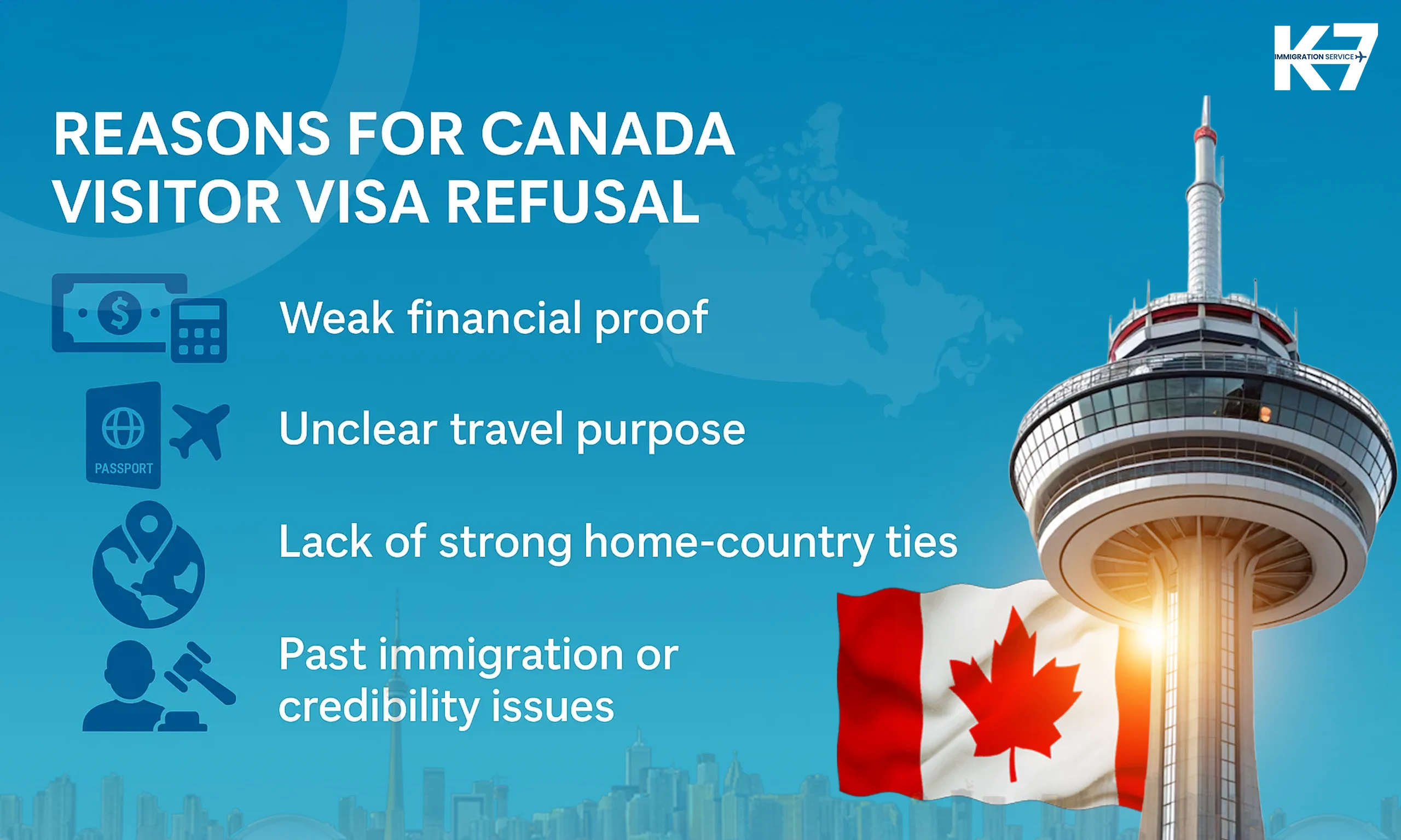
Canada visitor visa refusals have become more common and more explainable—because IRCC is now proactively adding officer decision notes to many refusal letters (starting July 29, 2025). This transparency helps applicants understand exactly what triggered the refusal and what evidence is missing for a stronger reapplication.
From an RCIC-style assessment perspective, a visitor visa (TRV) is approved only when you satisfy the officer that:
-
your visit is temporary, and
-
you have strong reasons to leave Canada at the end of your stay, supported by credible documentation and financial logic.
IRCC committee materials publicly report that the visitor visa refusal rate was 54% in 2024, up from 38% in 2023. It also shows 49% for April 2025.
Does a Canada Visitor Visa Refusal Mean You Are Banned?
A refusal is not a ban. You can apply again if your situation has changed or you have new documents/information that directly address the refusal reasons listed in your letter.
Also, there is no formal appeal process for temporary residence refusals; the practical route is usually a well-prepared reapplication (or judicial review in limited circumstances, handled by a lawyer).
Since July 29, 2025, IRCC started proactively providing officer decision notes with refusal letters for certain applications to improve transparency.
Practical benefit for applicants: You no longer have to guess whether the problem was your bank balance statement, purpose, travel history, or ties—many refusals now spell it out more clearly.
Most Common Canada Visitor Visa Refusal Reasons
Most TRV refusals boil down to one core test: Will this person leave Canada at the end of their authorized stay?
Refusal Reasons And Fix Strategy
| Refusal Reasons | What The Officer Is Doubting | What Fixes It In Reapplication |
|---|---|---|
| Purpose of visit is unclear / not reasonable | Trip logic doesn’t match timeline, funds, or profile | Detailed itinerary + hotel/event proof + short cover letter aligning dates, budget, and leave plan |
| Insufficient funds or weak financial profile | Funds look borrowed, inconsistent, or inadequate | 6-month statements + income proof + tax docs + explain large credits with evidence |
| Weak ties to home country | High overstay risk | Strong ties pack: employment letter + approved leave + salary slips + business proof + dependents + property/lease |
| Travel history concerns | First-time travel + high-risk profile | Add credible travel evidence (previous visas/trips), or strengthen ties/funds/purpose to compensate |
| Family in Canada / immigration intent suspected | Officer fears “visitor” is actually settlement attempt | Explain temporary intent clearly; show return obligations; keep itinerary short and logical |
| Inconsistent information / credibility issues | Statements don’t match documents | Clean, consistent forms + corrections + evidence index + explain any mismatch transparently |
(Refusal logic aligns with IRCC’s baseline expectation that applicants satisfy an officer their visit is temporary and they have sufficient means.)
Visitor Visa Reconsideration / Notice of Appeal
IRCC’s guidance is clear: reapply only if you have new information or your situation changed significantly, and it addresses the exact refusal reasons.
Reapply Decision Tree (Fast RCIC Check)
Reapply Makes Sense If: You can directly fix refusal points using new evidence (job change, stronger finances, clearer itinerary, corrected errors).
Reapply Is Risky If: You plan to submit the same file again with cosmetic changes only (same funds, same purpose, same weak ties).
Steps For A Strong TRV Reapplication (2026 Norms)
1) Read The Refusal Letter
Your reapplication should directly address each refusal reason with the right supporting documents and a clear, logical explanation. Every concern raised by the officer must be answered—nothing ignored, nothing assumed.
2) Write A Tight Cover Letter (1–1.5 pages)
Keep it structured:
- purpose (what/where/when)
- duration (short, realistic)
- funds (budget + proof)
- ties (employment/family/assets/obligations)
- compliance (return date + why)
3) Strengthen “Ties To Home Country” With Evidence, Not Claims
Officers do not accept “I will return” statements without proof. Build a ties pack:
| Tie Type | Best Supporting Documents |
|---|---|
| Employment tie | employment letter, approved leave, salary slips, HR verification, contract |
| Business tie | GST/tax registration, invoices, business bank statements, client contracts |
| Family tie | marriage certificate, children school letters, caregiver responsibilities proof |
| Asset tie | property registry, mortgage, rent agreement + rent receipts |
| Financial tie | ITR/tax filings, stable income, consistent savings |
4) Make Your Financial Story “Officer-Proof”
Common refusal pattern: “Proof of funds available” but not credible.
Do this:
- show 6 months bank statements (minimum), not just a single balance screenshot
- explain large deposits with paper trail (salary credit, business receipts, asset sale proof)
- include tax filings when available (strong credibility signal)
5) Keep Trip Duration Realistic
A 60–90 day plan for a first-time traveler with average savings often triggers skepticism. A short, well-funded itinerary usually reads more credible.
IRCC-Verified Facts On Visitor Visa Refusals
These statements are safe and supported by official sources:
- You can reapply after a refusal if you have new information that addresses refusal reasons.
- There is no formal appeal process for temporary residence refusals; reapplication is the usual path if you can fix issues.
- IRCC began providing officer decision notes with certain refusal letters on July 29, 2025.
- Visitor visa refusal rates were reported at 54% in 2024 (vs 38% in 2023) in IRCC committee material.
Conclusion:
A strong Canada visitor visa file in 2026 is not about “more documents.” It’s about answering the officer’s doubts with evidence:
- Clear purpose (logical itinerary + timeframe)
- Credible funds (consistent, explainable money trail)
- Strong home ties (job/business/family/assets)
- Consistency (no gaps, no contradictions)