Recommended Blog Posts
- How to Check Your QVC Medical Status Online: Complete 2026 Guide
- High-Demand Foreign Worker Jobs In Canada 2026: Top Occupations, Work Permits And PR Pathways
- Latest IRCC Backlog Insights 2025-26: Processing Time Trends and Predictions For Canada PR Applications
- IRCC Updates Immigration Policies for New Applicants: List of Changes for 2025-26
- Canada’s Tech Talent Strategy (H1B Visa Update): Comprehensive Immigration Pathways for Global Innovators
Canada Immigration Levels Plan 2026–2028 for Skilled Workers & International Students
Publish On: November 12, 2025
The newly revealed 2026–2028 Immigration Levels Plan does more than outline numbers. It defines priorities — a balance between growth, sustainability, and inclusion. For Canada, it’s a promise to keep the doors open, but with purpose.
A Steady Hand After Years of Rapid Growth
Under the 2026–2028 levels plan, Canada will continue to welcome over 500,000 new permanent residents every year, maintaining that figure through 2028. But this time, the approach is more surgical — directing newcomers to where they’re most needed, rather than where they already are.
Over 60% of these admissions will continue to come through economic immigration programs such as Express Entry, Provincial Nominee Programs (PNPs), and the Atlantic Immigration Program (AIP).
In essence, Canada isn’t slowing down. It’s fine-tuning — growing with intention instead of momentum.
Beyond the Numbers: The Strategy Behind the Plan
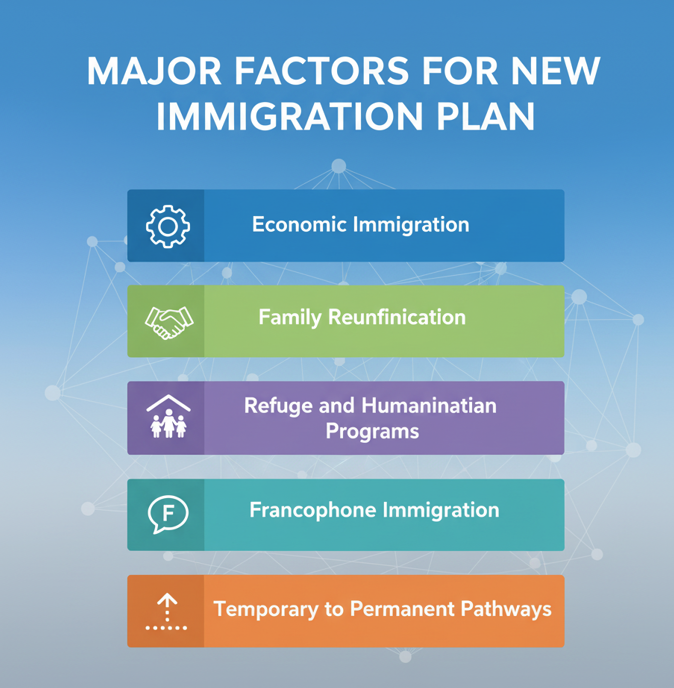
It’s easy to get lost in figures, but every statistic in this plan tells a story. Here’s what the roadmap looks like between 2026 and 2028:
- Economic immigration: 300,000+ skilled workers, caregivers, and provincial nominees each year.
- Family reunification: Around 110,000–120,000 newcomers annually.
- Refugee and humanitarian programs: Over 70,000, reinforcing Canada’s moral commitment.
- Francophone immigration: A 6–7% target outside Quebec to build bilingual capacity.
- Temporary to permanent pathways: Expanded for PGWP holders and essential workers.
Together, these streams form a portrait of a country that still believes in immigration as an economic driver — but also as a human story.
Express Entry 2026: Precision Over Points
The Express Entry system — Canada’s hallmark immigration channel — is evolving again, this time toward precision. Gone are the days when only the highest CRS scores ruled the game. By 2026, Canada’s draws will lean even more on category-based selections, targeting candidates who fit real labour market gaps.
That means more invitations for healthcare professionals, construction experts, tradespeople, and tech specialists. French-speaking applicants will continue to see a boost, reflecting the government’s broader Francophone immigration target 2026.
Express Entry 2026, in short, will reward fit over form — prioritizing the right skills, at the right time, in the right regions.
Students and Graduates: A Sharper Focus on Quality
Expect study permit approvals to favour applicants entering public, high-quality institutions and programs that match Canada’s economic immigration priority sectors 2026 — think healthcare, engineering, technology, or skilled trades.
The PGWP 2026 policy change will go a step further, linking post-graduation work permit eligibility more directly to labour needs. Graduates in priority regions or industries will see faster transitions to PR.
For Liang, a recent computer science graduate from Halifax, this shift works in his favour. His program aligns perfectly with Nova Scotia’s growing tech sector, making his PR pathway clearer and quicker.
From Temporary to Permanent: Building Stability
Canada has long depended on temporary residents — from international students to foreign workers — to fill immediate labour gaps. But temporary status alone doesn’t build communities.
The 2026–2028 plan aims to turn this transient workforce into a permanent foundation. Expect more PR spaces for those already contributing to the Canadian economy through programs like the Canadian Experience Class (CEC) and regional PNPs.
For newcomers, this shift means greater security and belonging. For Canada, it means stronger retention and stability — a win for both sides.
Where the Growth Lies: Canada’s Regional Push
One of the most significant evolutions in the new plan is the regional lens.
Canada’s largest cities — Toronto, Vancouver, Montreal — are nearing capacity in housing and infrastructure. But smaller provinces are hungry for growth. That’s where immigration becomes a nation-building tool.
Under the 2026–2028 plan, programs like the Atlantic Immigration Program and Rural and Northern Immigration Pilot will play bigger roles in attracting newcomers to smaller communities. The Prairies and Atlantic provinces are expected to see higher allocations, especially for critical sectors like healthcare, trades, and green energy.
If you’re open to living where opportunity truly lives — Halifax, Moncton, Saskatoon, or Fredericton — your pathway to PR could be faster and smoother than ever.
RCIC Updated Targets For Family Sponsorship 2026
The family sponsorship levels plan 2026 keeps family reunification front and centre, with priority processing for spouses, partners, and dependent children. The Parents and Grandparents Program (PGP) will maintain roughly 30,000 annual admissions, supported by improved digital processing tools for faster turnaround.
On the humanitarian side, Canada remains a global leader in refugee resettlement, continuing to accept tens of thousands displaced by conflict each year.
This enduring balance between compassion and pragmatism is what continues to make Canada’s immigration story distinct — a system driven not only by economics but by empathy.
Continuous Increase For Francophones With 2026 Targets
The Francophone immigration target 2026, which seeks to welcome 6–7% of newcomers outside Quebec as French speakers, is an integral part of the plan.
Provinces like Ontario, New Brunswick, and Manitoba are expanding their Francophone streams within PNPs. French-speaking professionals — especially in education, healthcare, and public service — now have stronger prospects for PR.
Even those with conversational fluency stand to benefit from bonus CRS points or targeted draws, making bilingualism one of the most valuable skills in Canada’s evolving immigration landscape.
How to Prepare for 2026–2028: Strategy Guided by an RCIC
Immigration success in this cycle won’t come from rushing — it will come from planning. Here’s how you can prepare:
- Stay informed. Follow IRCC updates on Express Entry, PNPs, and PGWP policies.
- Be strategic. Study or work in fields that align with Canada’s priority sectors.
- Learn French. Even intermediate proficiency can unlock new pathways.
- Consider location. Smaller provinces often offer faster processing and better job matches.
- Plan early. Don’t wait until your permit is expiring to begin your PR journey.
- Seek advice. Trusted immigration experts can help tailor your pathway.
Which Province May Get the Highest PNP Allocation in 2026?
Under Canada’s 2026–2028 Immigration Levels Plan, PNP admissions are set at 91,500 for 2026, showing a stronger focus on province-led immigration.
Based on current provincial updates, Ontario is expected to receive the highest PNP allocation, with 14,119 nominations for 2026. This makes the OINP an important pathway for skilled workers, international students, healthcare workers, tech professionals, and candidates with Ontario job offers.
However, a higher allocation does not guarantee selection. Applicants must still meet stream-specific eligibility, job offer rules, EOI score requirements, and occupation priorities.
Manitoba remains one of the important provinces for skilled workers looking for Canada PR through the Provincial Nominee Program. While the number of invitations may change in every MPNP draw, the province generally uses its nomination allocation to select candidates who can meet local labour market needs and settle successfully in Manitoba. For immigrants, Manitoba can be a valuable PR pathway because selection is not based only on a high CRS score.
Conclusion
The Canada Immigration Levels Plan 2026–2028 marks a new chapter in the country’s story — one of balance, opportunity, and renewal.
- For skilled workers, it means more targeted chances to match your expertise with Canada’s economic needs.
- For international students, it means clearer paths to PR — if you choose your field and region wisely.
- For families, it’s continued reassurance that Canada’s heart still beats for reunification and refuge.
So, if you’ve been waiting — this is your moment. Refine your skills. Choose your province carefully. Start building your story now.
Because while Canada still opens its doors wide, it’s now looking for those ready not just to arrive — but to stay, contribute, and belong.